By Mahmoud Chehade · Updated October 2026
The LACPA Exam: Requirements, Structure, and How to Pass
Everything you need to become a certified public accountant in Lebanon: eligibility, the exam subjects, the experience requirement, and a study plan that works.
In this article
- What is the LACPA and why does the license matter?
- What are the LACPA exam requirements?
- What do the LACPA exams actually test?
- How should you prepare for the LACPA exam?
- What does LACPA membership require after you pass?
- How does the LACPA license compare to a CPA or CMA?
- What mistakes cause candidates to fail?
- How Balance Brightness prepares you for the LACPA exam
- Frequently asked questions
- The bottom line
Short answer: the LACPA exam requirements for practicing as a certified public accountant in Lebanon are a university degree in accounting, a supervised traineeship under a LACPA member (three years as standard under the association’s bylaws), and success in the professional examinations of the Lebanese Association of Certified Public Accountants. The exams cover accounting under IFRS, audit, Lebanese tax and law, and ethics.
The license is worth the effort: LACPA membership is the only route to signing audit opinions and practicing public accounting in Lebanon. Here is the whole path, requirement by requirement, plus the study approach that gets candidates through on the first attempt.
What is the LACPA and why does the license matter?
The Lebanese Association of Certified Public Accountants (LACPA) is the sole professional accountancy body in Lebanon, established under Law 364 of 1994, and every practicing CPA in the country must be a registered, licensed member [Source: IFAC Lebanon profile].
That legal monopoly is what gives the license its weight. Without LACPA membership you cannot sign statutory audits, represent yourself as a CPA, or offer public accounting services, no matter what other credentials you hold. LACPA is also a member of the International Federation of Accountants, which ties Lebanese practice to international standards on audit, ethics, and continuing education. For the difference between this license and the international letters, see our CPA vs CMA comparison.
What are the LACPA exam requirements?
Three requirements gate entry to the profession: a relevant degree, supervised experience, and the professional exams. Per IFAC’s profile of the Lebanese profession, candidates need a university degree, practical experience under the supervision of a LACPA member, and successful completion of LACPA’s professional examinations [Source: IFAC Lebanon profile]. LACPA’s bylaws set the standard traineeship at three years, reduced to one year for holders of a licensed CPA [Source: LACPA Internal Bylaws].
| Requirement | What it means in practice |
|---|---|
| Accounting degree | University degree with an accounting concentration |
| Supervised experience | 3 years under a licensed LACPA member (1 year for holders of a recognised foreign CPA) |
| Professional exams | LACPA examinations across accounting, audit, tax, law, ethics |
| Registration | Membership and annual fees to maintain active status |
| After admission | Continuing professional development (CPD) obligations |
The experience clock and the exam preparation can run in parallel, which is how organized candidates save a year or more on the total timeline.
What do the LACPA exams actually test?
The examinations test the working knowledge of a practicing Lebanese auditor: financial accounting and reporting under IFRS, auditing, Lebanese taxation, commercial and professional law, and ethics. IFRS is central because Lebanon has required it for companies since 1996 [Source: IFAC, Lebanon profile], so questions assume you can apply the standards, not just recite them; our IFRS vs GAAP guide shows the framework knowledge expected.
The tax and law papers are where international-minded candidates stumble, because the material is specifically Lebanese: income tax mechanics, VAT, filings with the Ministry of Finance, and the obligations Law 364 places on practitioners. Courses like Lebanese tax filing and Lebanese accounting law target exactly these papers.
How should you prepare for the LACPA exam?
Treat it like a project with a deadline, not a background task. The candidates who pass on the first attempt follow the same pattern: a fixed study calendar of 10 to 12 weeks per subject block, weekly practice questions under time pressure, and early focus on their weakest paper rather than their strongest.
Three study rules carry most of the result. First, sequence subjects so the heaviest memorization, tax and law, lands closest to the exam date. Second, practice writing full answers, because knowing the standard and constructing an answer under time pressure are different skills. Third, study with structure and accountability: even the US CPA exam saw 2025 pass rates between 42 and 78 percent by section [Source: AICPA & CIMA, 2025 pass rates], and unstructured self-study is the most common reason candidates land on the wrong side of those numbers. A guided program with a set calendar, like our LACPA Exam Preparation Program, exists to remove that risk.
What does LACPA membership require after you pass?
Passing the exams starts the obligations rather than ending them. LACPA’s bylaws set an annual subscription of 1,000,000 Lebanese pounds for practicing CPAs and 500,000 for non-practicing CPAs and for trainees, payable within the first three months of the year, which the Council may extend to April 30 [Source: LACPA Internal Bylaws, Article 46]. Those amounts predate the lira’s collapse, so confirm the current figures with LACPA before you pay.
Members also carry continuing professional development requirements, which LACPA is empowered to set and monitor under its IFAC membership obligations. In practice that means documented training hours every year across accounting, audit, tax, and ethics. Practitioners who treat CPD as a chore fall behind the standards they audit against; the ones who use it to stay current on IFRS updates and Lebanese tax changes turn the obligation into billable expertise.
How does the LACPA license compare to a CPA or CMA?
They solve different problems: the LACPA license is legal permission to practice publicly in Lebanon, while the American CPA and the CMA are portable signals of expertise. Only LACPA membership lets you sign a Lebanese statutory audit, because Law 364/1994 reserves public practice for registered members [Source: IFAC].
| Credential | What it grants | Where it counts |
|---|---|---|
| LACPA license | Legal right to practice public accounting and sign audits | Lebanon |
| US CPA | Public accounting credential under a US state board | US and multinational employers |
| CMA | Management accounting certification | Corporate finance roles worldwide, strong in the GCC |
The strongest Lebanese profiles stack them: LACPA for local practice, an international credential for regional mobility. Our CPA vs CMA guide breaks down which international letters fit which career.
What mistakes cause candidates to fail?
The failure patterns repeat, and none of them are about intelligence. The most common is unstructured self-study: even on the US CPA exam, 2025 pass rates ran from 42 to 78 percent by section [Source: AICPA & CIMA, 2025 pass rates], and candidates without a calendar and a feedback loop supply most of the failures.
The next two are Lebanese-specific. Candidates from multinational backgrounds underprepare the local tax and law papers, assuming international knowledge transfers; it does not, because the papers test Ministry of Finance mechanics and Law 364 obligations. And candidates who never rehearse full written answers run out of time in the hall even when they know the material. Every one of these has a boring fix: a study calendar, early tax and law review with courses like Lebanese tax filing, and weekly timed practice.
How Balance Brightness prepares you for the LACPA exam
The Balance Brightness LACPA Exam Preparation Program is a complete, structured path to the exam: live sessions in English and Arabic, online or in person in Beirut, covering IFRS accounting, audit, Lebanese tax, law, and ethics with weekly practice and feedback.
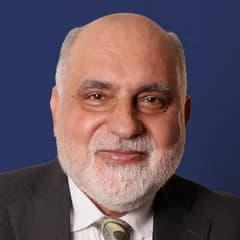
It is taught personally by Mahmoud Chehade, a certified trainer with 30 years of experience across accounting, audit, taxation, and finance in Lebanon and the GCC, specializing in LACPA exam preparation and professional accounting training. He has guided hundreds of candidates through these exams and trained more than 500 professionals overall. Supporting courses cover tax filing, the MoF portal, and foundations if you are earlier in the journey. See how coaching works for individuals, or start with a free webinar.
Unsure whether you meet the LACPA exam requirements yet? One-on-one coaching with Mahmoud Chehade starts by checking exactly that, then builds your study plan. Firms sponsoring several candidates can arrange in-company training.
Frequently asked questions
How long does it take to become a LACPA member?
Plan for roughly four to six years from graduation. The practical experience requirement, three years as standard under LACPA’s bylaws and supervised by a licensed LACPA member, is the long pole, and it can run while you prepare for the professional exams. Candidates who treat the exams as a project with a fixed calendar, rather than something to attempt when work quiets down, consistently finish faster. A structured prep program compresses the exam phase; nothing compresses the experience requirement.
Do I need the LACPA license if I already have a CPA or CMA?
Yes, if you want to practice public accounting in Lebanon. Law 364/1994 reserves statutory audit and public practice for registered LACPA members, and an American CPA or an IMA CMA does not substitute for the local license. The international credentials remain valuable: they strengthen your file, deepen your technical base, and open regional roles. Many professionals hold both, using LACPA membership to practice locally and the international letters to work with multinational clients.
What subjects do the LACPA exams cover?
Expect to be tested on the core of Lebanese public practice: accounting under IFRS, which Lebanon has required since 1996, auditing standards, Lebanese tax including income tax and VAT, commercial law, and professional ethics. The center of gravity is local application: how the frameworks apply to Lebanese entities, filings with the Ministry of Finance, and the obligations of a practicing auditor under Lebanese law. Candidates strong in international standards but rusty on Lebanese tax mechanics should start their review there.
Can I work as an accountant in Lebanon without LACPA membership?
Yes, in private roles. You can keep books, run a finance department, or work as an internal accountant for a company without being a LACPA member. The license becomes mandatory the moment you practice publicly: signing audit reports, offering accounting services to the public, or presenting yourself as a certified public accountant. That distinction is why many corporate accountants delay membership, and why those aiming at their own practice or an audit career treat it as non-negotiable.
The bottom line
The LACPA exam is demanding but completely mappable: degree, supervised experience, and exams you can prepare for on a calendar. Start the experience clock early, prepare with structure, and the license that unlocks public practice in Lebanon is a project, not a lottery.
Ready to commit to a date? Book a consultation and we will build your study plan around your exam window.
Sources
Written by
Mahmoud Chehade
Founder & Lead Trainer
30 years in practice and 500+ professionals trained in accounting, tax and finance, from LACPA exam candidates to finance teams.
About Mahmoud